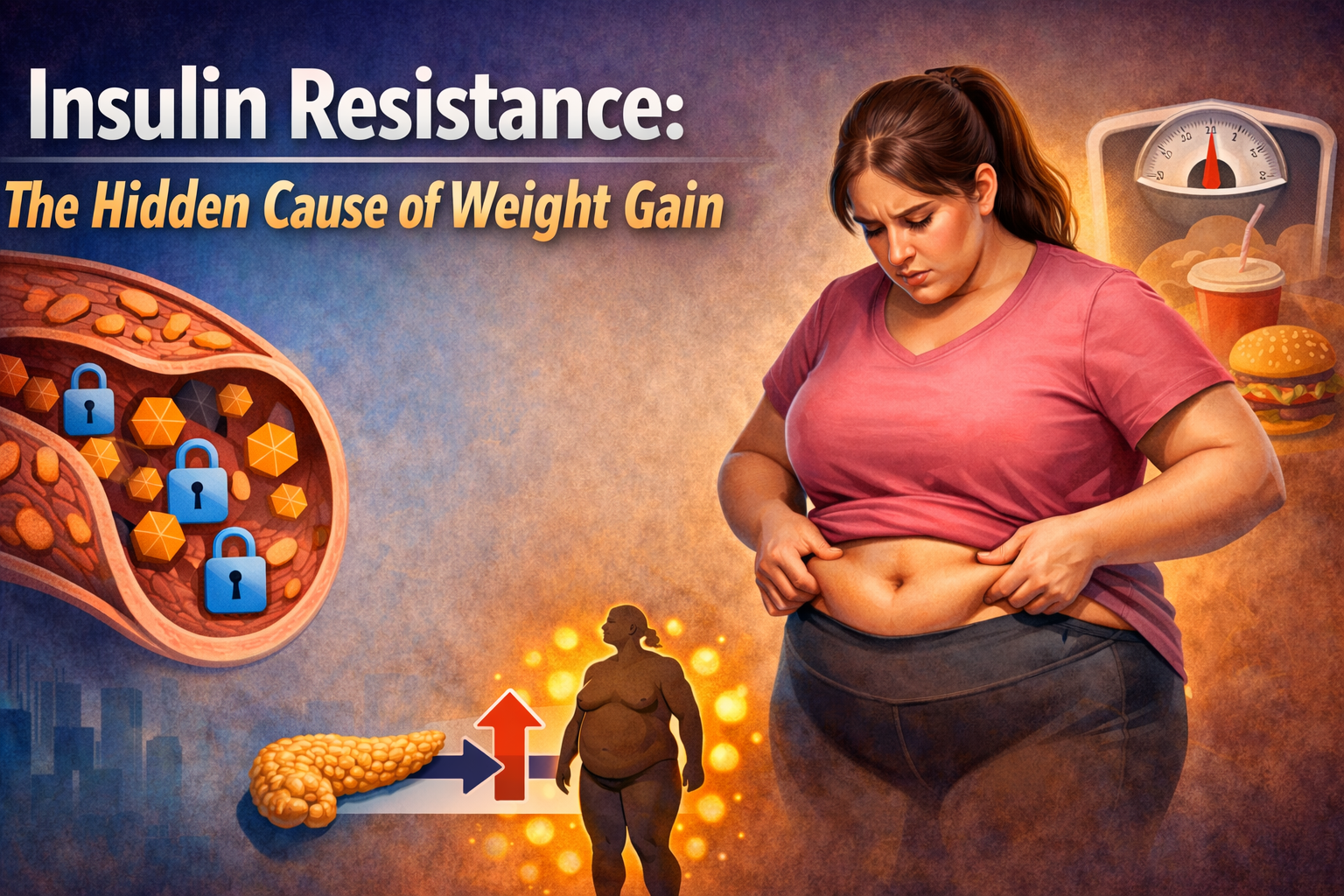
Insulin Resistance: The Hidden Cause of Weight Gain
Weight gain is often blamed on overeating or a lack of exercise. But for many people, the real cause runs much deeper, insulin resistance, a silent metabolic condition that disrupts how the body stores and uses energy. Despite its strong link to obesity, diabetes, and metabolic disorders, insulin resistance often remains undiagnosed for years. Understanding it may be the key to sustainable weight loss and long-term metabolic health.

What Is Insulin Resistance?
Insulin is a hormone that helps your body use glucose (sugar) from food for energy. When cells stop responding effectively to insulin, the body produces more of it to compensate, a condition known as insulin resistance.
Over time, excess insulin promotes fat storage, increases hunger signals, and disrupts metabolism, making weight gain easier and weight loss much harder.
Researchers have shown that insulin resistance plays a central role in:
● Fat accumulation, especially abdominal fat
● Increased blood sugar levels
● Metabolic syndrome
● Type 2 diabetes
● Fatty liver disease
Insulin resistance is now recognised as a major driver of non-alcoholic fatty liver disease and metabolic disorders even in non-obese individuals.
Why Insulin Resistance Causes Weight Gain
1. Increased Fat Storage
High insulin levels signal the body to store excess glucose as fat, particularly around the abdomen. This process reduces fat burning and increases weight gain.
2. Constant Hunger and Cravings
Insulin spikes can lead to rapid drops in blood sugar, causing frequent hunger, sugar cravings, and overeating.
3. Slower Metabolism
Chronic high insulin disrupts metabolic flexibility, which is the body’s ability to switch between burning carbohydrates and fat efficiently.
4. Hormonal Imbalance
Insulin resistance affects other hormones, including leptin, cortisol, and reproductive hormones, further promoting weight gain and conditions like PCOS.
How Common Is Insulin Resistance?(Statistics & Evidence)
Insulin resistance is far more wide spread than most people realise.
● Around 60% of South Asians may have insulin resistance, many without knowing it.
● A study of overweight or obese Indian schoolchildren found 32.3%had insulin resistance, highlighting early onset metabolic risk.
● Research shows insulin resistance can occur even in people who are not overweight, demonstrating that body weight alone is not a reliable indicator.
● Among patients with fatty liver disease, up to 97.5% of obese individuals and 80% of lean individuals showed insulin resistance, proving it can exist even without obvious obesity.
India is also experiencing a rapid rise in metabolic diseases, with over 100 million diabetes cases and 136 million prediabetes cases, conditions strongly linked to insulin resistance.
The Indian Context: Why Risk Is Higher
South Asian populations have unique metabolic characteristics that increase susceptibility:
● Higher body fat percentage at lower BMI
● Greater tendency for abdominal fat storage
● High-carbohydrate dietary patterns
● Sedentary lifestyle and urban stress
● Genetic predisposition
Studies also show that central obesity and low physical activity are strongly associated with insulin resistance and cardiovascular risk in urban Indian populations.
This explains why many individuals struggle with “stubborn weight” despite dieting or exercising.
Warning Signs of Insulin Resistance
Many symptoms are subtle and often ignored:
● Persistent weight gain or difficulty losing weight
● Belly fat accumulation
● Fatigue after meals
● Sugar cravings
● Darkened skin patches (acanthosis nigricans)
● PCOS or irregular periods
● Prediabetes or high fast inginsulin
Early detection is critical because insulin resistance can remain silent for years before developing into diabetes.
Can Insulin Resistance Be Reversed?
Yes — in many cases, insulin resistance can be improved or reversed through targeted medical and lifestylei nterventions.
Evidence-based approaches include:
● Structured nutrition plans
● Blood sugar control strategies
● Physical activity and resistance training
● Weight management
● Sleep and stress regulation
● Medical supervision and metabolic monitoring
Because insulin resistance involves hormones, metabolism, and lifestyle factors, a comprehensive approach works best.
A Root-Cause Approach to Weight Loss
Traditional weight loss advice often focuses only on calorie restriction. However, growing evidence shows that addressing metabolic dysfunction produces more sustainable results.
Programs that combine:
● physician supervision
● metabolic testing
● personalized nutrition
● lifestyle coaching
● medical therapy when needed
are increasingly used to address the underlying drivers of weight gain rather than symptoms alone.
This integrated approach is the foundation of modern metabolic care and is central to how platforms like ReverseAll support individuals in managing insulin resistance, improving metabolism, and achieving sustainable weight and health outcomes.
Why Early Intervention Matters
Unchecked insulin resistance increases the risk of:
● Type 2 diabetes
● Heart disease
● Fatty liver disease
● Hormonal disorders
● Metabolic syndrome
Because the condition develops gradually, early detection and intervention can significantly reduce long-term health risks.
Address the Root Cause, Not Just the Weight
Weight gain is not always about will power; sometimes it’s about biology. Insulin resistance silently reshapesmetabolism, increases fat storage, and makes weight loss difficult.
Understanding and addressing this hidden driver may be the missing link for millions struggling with stubborn weightgain and metabolic health challenges.
As healthcare increasingly shifts toward personalised, root-cause treatment, tackling insulin resistance is becoming the cornerstone of sustainable weight management.
FAQs
1. What is insulin resistance?
Insulin resistance happens when the body’s cells stop responding properly to insulin, causing high insulin levels and increased fat storage.
2. Does insulin resistance cause weight gain?
Yes. High insulin levels promote fat storage, increase hunger, and make weight loss harder.
3. What are common symptoms of insulin resistance?
Weight gain, belly fat, fatigue after meals, sugar cravings, and difficulty losing weight.
4. Can insulin resistance be reversed?
In many cases, yes, with proper diet, exercise, lifestyle changes, and medical guidance.
5. Who is at risk of insulin resistance?
People with obesity, a sedentary lifestyle, a family history of diabetes, PCOS, or high-carb diets are at higher risk.
6. How is insulin resistance diagnosed?
Through blood tests such as fasting glucose, insulin levels, and HbA1c.
7. Why is treating insulin resistance important?
It helps prevent diabetes, heart disease, fatty liver, and long-term metabolic complications.